CURE Mannheim
Speed Meets Security: Formula Team secures password sharing
About the Organization
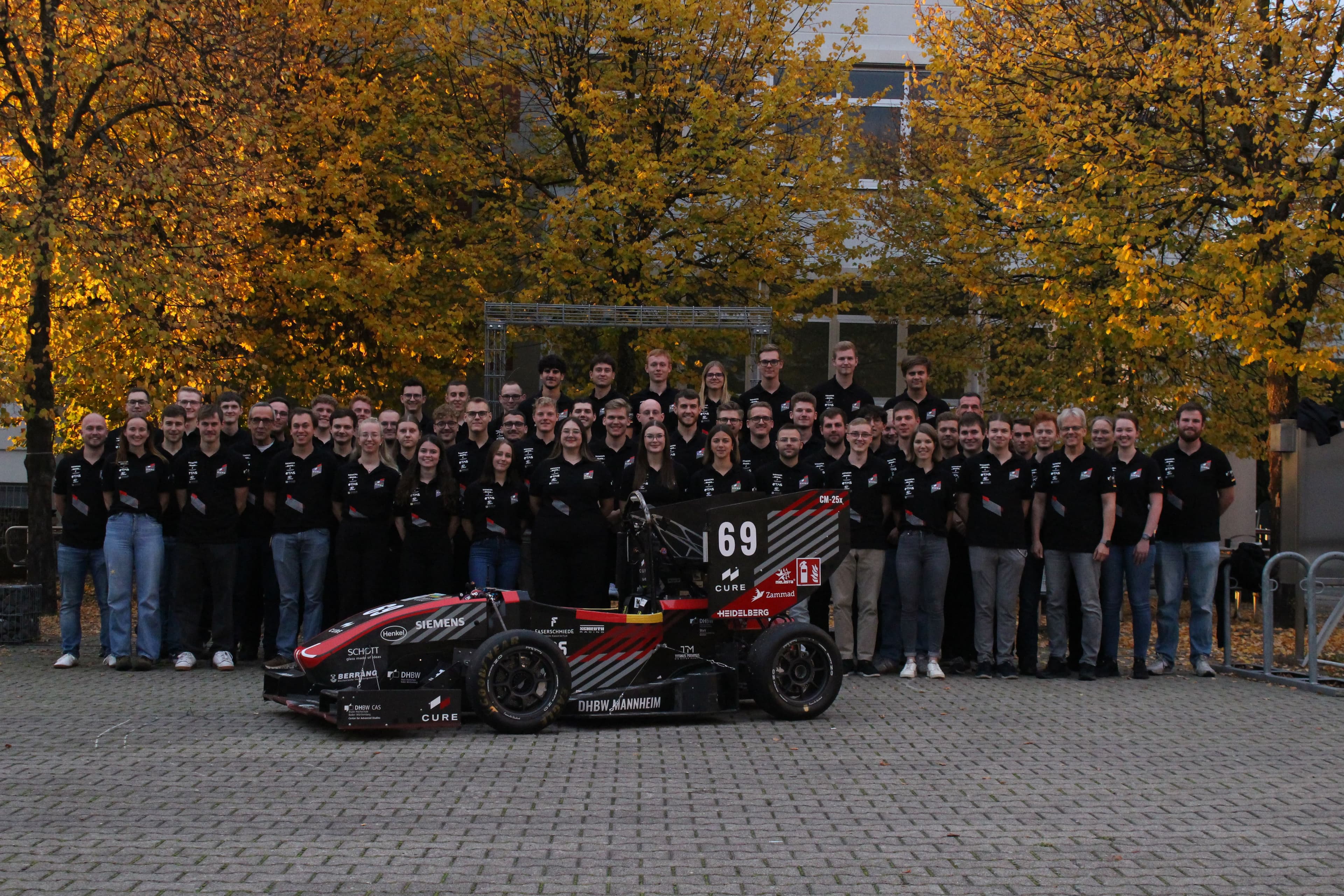
CURE Mannheim e.V. is a Formula Student team at DHBW Mannheim University.
Their mission is to design, build, and market an electric race car each year while developing skills in engineering, teamwork, and project management.
The team is supported by alumni, academic staff, and industry partners across more than 20 fields, covering over 23 specialties ranging from mechanical and electrical engineering to IT and business studies. By combining academic knowledge with hands-on experience, CURE Mannheim bridges the gap between theory and industry, fostering innovation and preparing the next generation of engineers and business leaders.
The Challenge
In CURE Mannheim’s highly collaborative environment, access management was a major friction point. The team faced an “all-or-nothing” challenge when sharing credentials, with no effective way to control access granularity.
Onboarding new members was slow and manual, requiring them to go through a checklist of 20+ passwords. At the same time, the lack of a proper system introduced security risks, including credential leakage from passwords being shared over Slack or email.
The Solution
To address these access and security challenges, CURE Mannheim implemented Passbolt, selecting it for its group sharing and granular permission capabilities. This enabled the organisation to establish a tailored security model aligned with their multi-disciplinary structure, ensuring users have access only to the credentials they need, and nothing more.
The Results
The implementation of Passbolt delivered clear improvements in both security and operational efficiency. Its access control model supports structured, flexible collaboration:
- Tiered access via departmental groups: Dedicated groups for teams such as Finance, IT, and HR ensure that new hires receive immediate access to the credentials they need, reducing onboarding time to just a few minutes.
- Ad-hoc sharing: When a task requires cross-functional collaboration, access to a specific credential can be granted to an individual without exposing the entire folder or group library.
- Granular permission levels: Using role settings such as “Can View,” “Can Update,” and “Is Owner”, CURE Mannheim allows broader password usages while restricting credential changes to designated administrators.
- Enhanced Security: Centralised sharing effectively eliminated credential leakage by removing insecure practices such as sharing passwords over Slack or email.

